
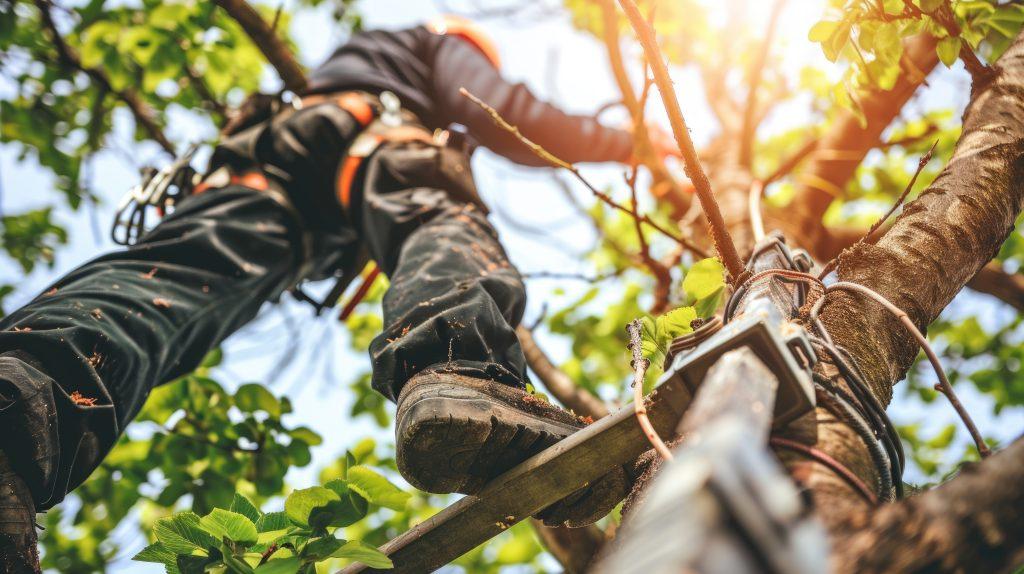
What Is the Difference Between Tree Trimming and Tree Pruning?
An ISA Certified Arborist Explains What York and Lancaster PA Homeowners Actually Need
By Specialty Tree Service | August 2026
If you have ever called a tree company and used the words “trimming” and “pruning” interchangeably, you are not alone. Most homeowners do. But for an ISA Certified Arborist, the two words mean very different things, serve different purposes, and require different techniques. Getting the distinction right can be the difference between a tree that thrives for another 50 years and one that slowly declines because of improper cuts. At Specialty Tree Service, we have been caring for trees across York and Lancaster County since 1980. One of the most valuable things we can do for our customers is explain the “why” behind our work. So here is a clear, honest breakdown of tree trimming versus tree pruning, when each is appropriate, and what you should be asking for when you call us.
Trimming vs. Pruning: The Core Difference
The simplest way to understand the difference is this: trimming is primarily about appearance and property protection, while pruning is primarily about the long-term health and structure of the tree itself. Both are important. Neither replaces the other.
Tree Trimming
■ Focused on aesthetics and clearance
■ Removes overgrown, obstructing, or unruly growth
■ Keeps trees clear of structures, utilities, and roads
■ Improves the look and shape of the canopy
■ Typically done on a recurring maintenance schedule
■ Applied to both trees and shrubs
Tree Pruning
■ Focused on tree health and long-term structure
■ Removes dead, diseased, crossing, or weak branches
■ Improves air circulation and light penetration
■ Reduces storm damage risk by balancing the canopy
■ Requires knowledge of tree biology and species
■ Should always be performed by a certified arborist
In practice, a professional service visit from Specialty Tree Service often involves both. Our arborists assess each tree individually and apply the right technique for what that tree needs, not a one-size-fits-all approach.
Tree Trimming: What It Is and When You Need It
Tree trimming is the practice of cutting back branches that have grown beyond where you want them, regardless of whether those branches are healthy or not. The goal is control: keeping the tree a safe distance from your roof, gutters, siding, power lines, driveways, and neighbors’ property.
You need tree trimming when:
■ Branches are scraping or overhanging your roof, gutters, or siding
■ Limbs are growing into or near utility lines
■ The canopy is blocking light to your lawn, garden, or solar panels
■ Low-hanging branches obstruct a driveway, walkway, or sightline
■ The tree has grown lopsided and is creating wind-load imbalance In July, trimming is especially important for York and Lancaster County homeowners because peak storm season runs through August. Branches in contact with your roof are not just a maintenance nuisance. In a severe thunderstorm, they become levers that can pry shingles loose, clog gutters with debris, or puncture siding. Clearing that contact zone before storm season is one of the highest-value things you can do for your property.
Tree Pruning: What It Is and Why It Requires a Certified Arborist
Tree pruning is a science-based practice guided by the biology of the tree. Every cut made during pruning affects how the tree grows, responds to stress, and defends itself against disease. A wrong cut, made in the wrong place or at the wrong angle, can create a wound the tree cannot seal properly, leaving it permanently vulnerable to decay fungi and pathogens. This is why Specialty Tree Service employs ISA Certified Arborists. The ISA (International Society of Arboriculture) certification requires demonstrated knowledge of tree biology, proper pruning technique, and industry safety standards. When our arborists prune your trees, they are applying natural pruning principles, making cuts that follow the tree’s own branch collar structure to promote fast, clean wound closure. Pruning Techniques We Use Technique What It Does Best For Natural Pruning and Thinning
Removes select branches to increase light penetration and air flow through the canopy. Reduces the sail effect that makes trees vulnerable to high winds.
Overly dense canopies; storm prep
Crown Elevation (Lifting)
Removes lower branches to create clearance above lawns, patios, driveways, and sidewalks. Improves usable space and sightlines beneath the tree.
Mature trees over high-traffic areas
Deadwood Removal Removes all dead, dying, and structurally compromised branches throughout the canopy. Prevents decay spread and eliminates unpredictable fall hazards.
All trees, all seasons Crown Reduction Reduces the overall size of the canopy by cutting back to lateral branches. Used when a tree has outgrown its space or poses a structural risk.
Trees near structures or utilities
Structural / Formative Pruning
Performed on younger trees to establish strong architecture early. Reduces the likelihood of future co-dominant stems, included bark, and poor branch structure. Young and newly planted trees
Why Bad Pruning Is Worse Than No Pruning
This is the part most homeowners do not hear often enough. Improper pruning does not just fail to help a tree. It actively harms it. Here are the most common mistakes our arborists see on properties where previous work was done by an unlicensed or inexperienced crew:
■ Topping Cutting the entire top of the tree off, leaving large, flat stubs. Topping is widely condemned by arborists as one of the most damaging things you can do to a tree. It triggers rapid, weakly attached regrowth, creates massive decay wounds, and destroys the tree’s natural structure. A topped tree rarely recovers its original strength or form.
■ Flush cuts Cutting a branch flush against the trunk, removing the branch collar. The branch collar is the tree’s natural healing tissue. Without it, the wound cannot close properly and becomes a permanent entry point for decay and disease.
■ Lion-tailing Stripping all the inner foliage and lateral branches, leaving growth only at the tips. This shifts weight
to the ends of branches, dramatically increasing breakage risk in wind, and starves the tree of the energy it needs to sustain itself.
■ Wrong season cuts on susceptible species Pruning oaks between April and July in Pennsylvania exposes fresh wounds during peak Oak Wilt transmission season. Pruning elms in late spring increases Dutch Elm Disease risk. Timing matters, and it differs by species.
Always ask whether the crew includes an ISA Certified Arborist. If the answer is no, your
trees are at risk. Every Specialty Tree Service job is guided by certified arborist expertise.
When Should You Schedule Trimming or Pruning in York and Lancaster, PA?
The honest answer is that different services have different optimal windows. Here is a practical guide for central Pennsylvania: Service Best Time Notes Deadwood removal Any time of year No bad season for safety pruning
Structural pruning Late fall to early spring Tree is dormant; wounds seal faster in Spring Clearance trimming Any time; urgently before storm season July is ideal before peak storms Oak pruning August through March only Avoid April through July due to Oak Wilt risk
Spring-flowering trees Right after blooming (May to July) Dogwood, lilac, magnolia, redbud Canopy thinning Late summer or dormant Season Reduces storm sail effect heading into fall
Frequently Asked Questions
Q: What is the difference between tree trimming and tree pruning?
A: Trimming focuses on controlling the size and shape of a tree for aesthetic and clearance purposes. Pruning focuses on the health, structure, and long-term vitality of the tree by removing dead, diseased, crossing, or structurally weak branches. Both require skill; pruning should always be performed by or under the supervision of an ISA Certified Arborist.
Q: Can I prune my own trees in York or Lancaster PA?
A: Light trimming of small branches within reach is generally safe for a homeowner. Any pruning that involves a ladder, a chainsaw, branches near structures or power lines, or cuts larger than an inch in diameter should be left to a professional. Improper cuts create permanent entry points for decay and disease. Specialty Tree Service offers free estimates throughout York and Lancaster County.
Q: How often should trees be trimmed or pruned?
A: Most mature trees benefit from a professional inspection and service every two to three years. Fast-growing species or trees near structures may need attention more frequently. Young trees benefit from formative pruning more regularly in their early years to establish strong structure. Our certified arborists can recommend a maintenance schedule specific to your property.
Q: Does pruning hurt a tree?
A: Proper pruning, performed with the right technique and at the right time, does not hurt a tree. It stimulateshealthy growth and removes wood that would otherwise become a liability. Improper pruning, including topping, flush cuts, and lion-tailing, does cause serious long-term harm. This is why certified expertise matters.
Q: Is summer a good time to trim trees in Pennsylvania?
A: Yes, with species-specific exceptions. July is an excellent time to address clearance trimming, deadwood removal, and storm-prep pruning before peak thunderstorm season. Avoid pruning oaks between April and July due to Oak Wilt risk. Spring-flowering trees that have finished blooming are ideal candidates for summer shaping.
Q: Do you trim and prune trees near power lines in York and Lancaster County?
A: Yes. Specialty Tree Service has the equipment and certified expertise to safely address trees near utility lines. We use aerial bucket trucks, cranes, and trained climbers to manage clearance work safely without contacting energized lines. Call us for a free assessment.
Schedule Your Free Tree Trimming or Pruning Estimate ISA Certified Arborists. Fully insured. Serving York and Lancaster County since 1980. Voted Best of York.
specialtytreeservice.com | 451 Tulip Lane, York PA 17406 (c) 2026 Specialty Tree Service | York: 717-755-7505 | Lancaster: 717-392-6306