
How Do I Know If a Tree Needs to Be Removed?
A Homeowner’s Guide from ISA Certified Arborists in York and Lancaster, PA
By Specialty Tree Service | July 2026
It is one of the most common questions homeowners across York and Lancaster County ask us: “Does my tree actually need to come down, or can it be saved?” It is a fair question. Trees are long-term investments, living landmarks on your property that provide shade, curb appeal, and real dollar value. Removing one is never a decision to take lightly. But some trees do need to be removed. A dying, diseased, or structurally compromised tree is not just an
eyesore. In July, when Pennsylvania’s most intense thunderstorms roll through York and Lancaster County, a hazardous tree becomes a serious threat to your home, your vehicle, and your family. Knowing the warning signs early is how you stay ahead of a costly or dangerous situation. Our ISA Certified Arborists have assessed thousands of trees across York County and Lancaster County since 1980. Here is exactly what we look for.
The Warning Signs: At a Glance
Use this table as a quick reference. If you spot any of these signs on a tree in your yard, call us for a free professional assessment before the next storm. Warning Sign What It Means Urgency
More than 50% of the crown is dead or dying
The tree cannot sustain itself and will continue to decline. Removal is almost always the right call.
High
Large dead branches overhanging your home
Deadwood falls without warning. A single branch can punch through a roof or injure someone below.
High
Severe lean after a storm Sudden or worsening lean indicates root or structural
failure. The tree is at high risk of falling.
High
Trunk cavities or hollow
sections
Internal decay severely weakens structural integrity. The tree may look healthy outside while failing inside.
High
Fungal growth at the base
Mushrooms or conks on or near the trunk signal advanced internal wood rot.
Med-High
Roots damaged or heaving
Severed, girdling, or heaving roots can destabilize a large tree entirely.
Med-High
Multiple co-dominant stems with included bark
A V-shaped split trunk with bark pinched inside is prone to catastrophic splitting in high winds.
Widespread disease or pest infestation
Trees with advanced Emerald Ash Borer damage or Oak Wilt infection rarely recover without early treatment.
Med-High
Tree is too close to your home or power lines
Roots and limbs in conflict with structures cause ongoing damage and liability.
Dead vs. Dying: Why the Difference Matters
Homeowners sometimes assume a tree that still has some green leaves is healthy enough to leave alone. That is not always true. A tree can be actively dying for years before the canopy reflects it. Here is how to tell the difference: A dead tree has no living tissue left. The bark peels away easily to reveal dry, gray wood underneath. There are no buds, no new growth, and branches snap rather than bend. Dead trees should be
removed promptly. They become increasingly brittle, and in July storm season, a dead tree is a falling hazard waiting for the right wind. A dying tree still has some living tissue but is in serious decline. You may see sparse, off-color foliage, premature leaf drop, dieback spreading from the top down, or seeping wounds on the trunk. A dying tree may be saveable if a certified arborist intervenes early with disease treatment, targeted pruning, or pest management. If the decline is too advanced, removal is the safer path. The only way to know for certain is a professional assessment. Our arborists use a combination of visual inspection, bark and wood sampling, and knowledge of regional disease patterns to give you an honest, science-based answer.
Can the Tree Be Saved? Questions We Ask First
Before recommending removal, our certified arborists always ask these questions. The answers determine whether treatment is viable or removal is the responsible choice.
■ How much of the crown is affected?
If less than 25% of the canopy is dead or diseased, the tree can often be saved through pruning
and treatment. Above 50%, removal is usually the better option for safety and cost.
■ Is the trunk structurally sound?
We probe for internal cavities and decay. A tree with a sound trunk and healthy roots can often
support a reduced crown for many more years.
■ Where is the tree located?
A dead tree in an open field carries very different risk than a dead tree overhanging a bedroom
window. Location relative to structures, power lines, and pedestrian areas heavily influences the
Recommendation.
■ Is the species worth saving?
A mature oak or maple has tremendous ecological and property value. We exhaust treatment
options for high-value specimens. A Bradford pear or invasive tree of heaven may be better
removed and replaced.
■ What is causing the decline?
Some causes, like drought stress or a single pest attack, are treatable. Others, like advanced Oak Wilt or severe Emerald Ash Borer infestation, are often terminal. Accurate diagnosis changes
everything.
Why July Is the Time to Act in York and Lancaster County
July and August are peak thunderstorm season in central Pennsylvania. The National Weather Service consistently records the highest frequency of severe wind events across York County and Lancaster County during these two months. That matters because most tree-related property damage we respond to after storms involves trees that showed warning signs beforehand.
A hazardous tree that survives a calm week in June may not survive a July microburst. Once a tree has fallen on a roof or across a driveway, the removal cost, structural repair cost, and insurance complexity all increase dramatically compared to a planned removal. Proactive is always less expensive than reactive. Do not wait for the next storm. If a tree on your York or Lancaster property is showing
any of the warning signs in this guide, call us today for a free, no-obligation
assessment.
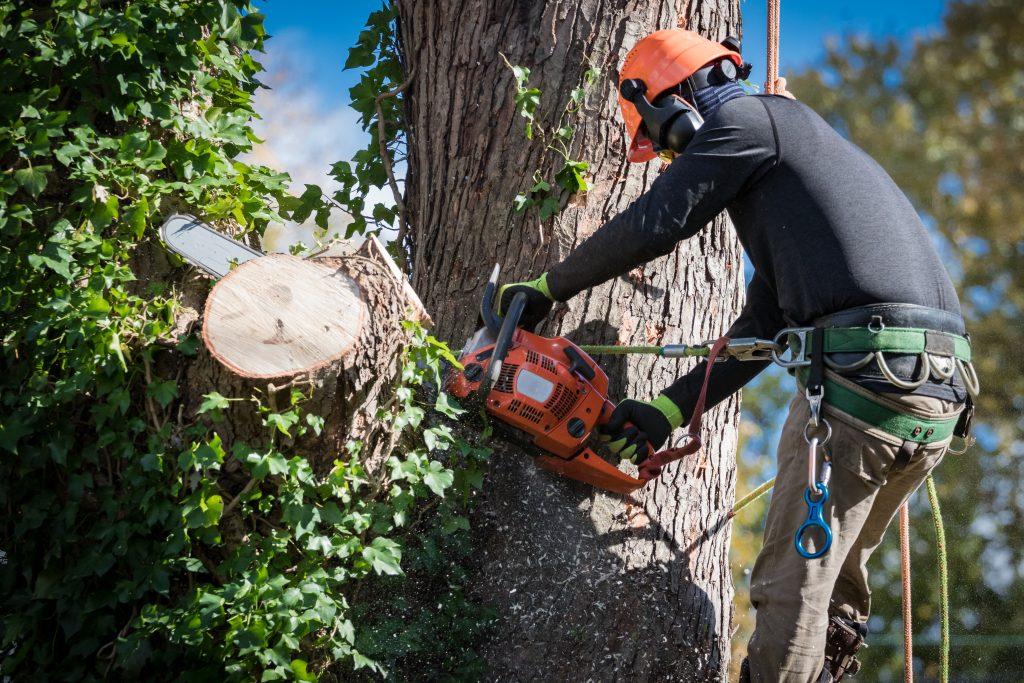
What Professional Tree Removal Looks Like
Many homeowners are nervous about tree removal because they picture damage to their lawn or nearby structures. When you hire Specialty Tree Service, here is what actually happens:
■ Free Assessment
An ISA Certified Arborist visits your property, evaluates the tree, and gives you a clear
recommendation and honest quote. No pressure.
■ Planned Removal
Our crew arrives with the right equipment for your specific situation: aerial bucket trucks, cranes,
track lifts, and trained climbers. Every job follows our ANSI-compliant safety program.
■ Precision Dismantling
For trees near homes, utilities, or fencing, we dismantle the tree section by section using rigging
techniques that control exactly where each piece lands. Nothing is dropped.
■ Complete Cleanup
All debris is chipped and hauled away. Your yard is left cleaner than we found it.
■ Stump Removal
We offer full stump grinding on the same visit or as a follow-up, eliminating the stump, surface
roots, and any risk of regrowth or pest harborage.
Frequently Asked Questions
Q: How do I know if a tree needs to be removed?
A: Look for a dead or severely declining crown, large deadwood over structures, trunk cavities, fungal growth at the base, a sudden or worsening lean, or advanced disease and pest damage. When in doubt, call an ISA Certified Arborist for a professional assessment. Specialty Tree Service offers free estimates throughout York and Lancaster County.
Q: Can a leaning tree be saved or does it need to come down?
A: It depends on the cause and angle of the lean. A gradual, long-standing lean in an otherwise healthy tree may be stable and manageable. A sudden lean after a storm, or a lean accompanied by heaving roots or cracked soil at the base, indicates imminent structural failure and requires immediate removal.
Q: Is it safe to remove a tree yourself in Pennsylvania?
A: Tree removal is one of the most dangerous home improvement tasks a homeowner can attempt particularly for trees near structures, power lines, or other obstacles. Even small trees can behave unpredictably when cut. We strongly recommend hiring an insured, ISA Certified tree service for any tree removal. Specialty Tree Service has been doing this safely since 1980.
Q: How much does tree removal cost in York or Lancaster PA?
A: Cost varies based on tree size, location, proximity to structures, and equipment required. Specialty Tree
Service provides free, no-obligation estimates. We also offer financing options for larger projects. Call 717-755-7505 (York) or 717-392-6306 (Lancaster) to schedule yours.
Q: Do I need a permit to remove a tree in York or Lancaster County?
A: Permit requirements vary by municipality. Some townships and boroughs in York and Lancaster County require a permit for removing trees above a certain diameter, particularly in historic districts or along street rights-of-way. Our team can advise you on local requirements during your assessment.
Q: What happens to the stump after a tree is removed?
A: Stumps can be ground and removed during the same service visit or scheduled separately. Stump grinding eliminates the stump, surface roots, and the risk of new sprout growth, pest harborage, and trip hazards. We can also apply topsoil and grass seed for complete lawn restoration.
Get a Free Tree Removal Estimate in York or Lancaster, PA
ISA Certified Arborists. Fully insured. Serving York and Lancaster County since 1980. Voted Best of York.
York: 717-755-7505 | Lancaster: 717-392-6306
specialtytreeservice.com | 451 Tulip Lane, York PA 17406
(c) 2026 Specialty Tree Service | York: 717-755-7505 | Lancaster: 717-392-6306